White House pushed Pentagon to give $620 million loan to company linked to Trump Jr.
Peter Navarro, a top White House adviser and friend of the president's son, initiated the deal with Vulcan Elements, a rare-earth magnet startup, which Pentagon staff then rushed to complete.
By Ezimma Belonwu
29 May, 2026
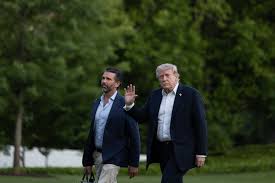
The Pentagon announced a $620 million loan last year to Vulcan Elements, a small North Carolina startup. The company is linked to Donald Trump Jr., the president's eldest son. When the deal was made public, Pentagon officials and the company's founder denied any political favoritism played a role.
But interviews and Defense Department records reviewed by ProPublica tell a different story. The request to loan hundreds of millions of dollars to Vulcan came from Peter Navarro, a White House adviser to President Donald Trump. Navarro is also a friend of Trump Jr.'s. Of the dozens of companies the Pentagon was considering funding at the time, Vulcan's was the only deal initiated by a top aide to the president, according to a Pentagon official.
After receiving the White House request, Pentagon officials asked their staff to move unusually fast. Workers stayed late and got little sleep to complete the loan in a matter of weeks. "The call came from the White House: We have to get this done," said a person involved in the deal who was not authorized to speak publicly.
Trump Jr. said through a spokesperson that he was not involved in the deal. The Pentagon said he played no role. A spokeswoman for 1789 Capital, the venture firm where Trump Jr. is a partner, said it did not learn about the deal before it was public and played no role in Vulcan getting the loan. Navarro did not respond to questions from ProPublica. A White House spokesperson said the administration is working "in the best interest of the American people."
This deal is one of many actions by the Trump administration that have helped companies in which the Trump family holds stakes. ProPublica's reporting marks the first time a federal agency's award of a contract has been directly linked to White House intervention. Richard Painter, who served as chief White House ethics lawyer under George W. Bush, said aides should not intervene in agency lending decisions that benefit the president's family. "This is our money they're spending," Painter said. "This is corruption we pay for."
The Pentagon's Office of Strategic Capital made the loan to reduce U.S. dependence on China's rare-earth minerals and other critical materials. China produces almost the entire world supply of many rare-earth elements essential to military equipment. Samarium, for example, is used in magnets that guide Tomahawk missiles and start F-35 fighter jet engines. China also dominates the process of separating rare earths from other materials they are bonded to. When China announced it was restricting exports of some rare-earth metals last year, the danger of relying on a single supplier became clear.
The Office of Strategic Capital was started under the Biden administration to fund private companies developing rare-earth materials and military technologies. The Trump administration expanded the office's lending authority from about $1 billion to $200 billion. It also changed how the office operates. The Biden administration had set up an open application process with careful vetting. The Trump administration instead sends officials out into the market to find companies it wants to fund. "The Trump administration is more interested in going out into the market and finding what it wants. We're not going to wait for people to apply to us," said a former Office of Strategic Capital official.
The office's new leaders are hard-charging former Wall Street executives who are making as many deals as possible. They rely more on personal networks than on applications when choosing companies to fund. So far, other companies selected include Korea Zinc, a metal refiner; MP Materials, a Nevada rare-earth mining company; and ReElement Technologies, an Indiana producer that partners with Vulcan. A leaked presentation from a headhunter recruiting for the office suggested that working there could help people raise their own fund in the future and gain "access to fundraising channels that include royal families and foreign sovereign contacts."
Vulcan was launched in 2023 by a Harvard Business School student. The company quickly secured small defense contracts starting during the Biden administration. Its first manufacturing facility opened in March 2025, and at that time the firm had less than $10 million in funding. In August 2025, Vulcan announced $65 million in investments, including from 1789 Capital, Trump Jr.'s venture firm. Neither company has publicly said how much of a stake the venture firm took.
Pentagon staff in the Office of Strategic Capital learned of the White House request for a Vulcan loan around September or October 2025. Companies considered for funding are normally vetted for many months. This deal was completed in weeks because officials were told it was a White House priority. A Pentagon spokesperson said the department balances "lightning speed with rigorous diligence to close high-impact deals that directly strengthen America's defense."
In November, the Pentagon announced plans to lend $620 million to Vulcan and another $80 million to ReElement. The Commerce Department offered $50 million in incentives. In exchange, the government would take a $50 million stake in Vulcan with the right to buy more later. Vulcan, which had fewer than 50 employees at the time, said it would use the money to build a large new facility making thousands of tons of magnets a year.
The deal was excellent news for Vulcan's investors. Estimates of the company's valuation jumped from around $200 million near the time 1789 Capital first invested to around $2 billion. Navarro's role in starting the deal was not publicly disclosed at the time.
Navarro and Trump Jr. have grown close in recent years. Trump Jr. visited Navarro while he was in prison for defying a congressional subpoena related to the January 6, 2021, Capitol riot. Navarro dedicated his latest book to Trump Jr. for having "my back when it was against the wall." A week before the Vulcan deal was announced, Trump Jr. hosted Navarro on his streaming show, encouraging his nearly 2 million subscribers to buy Navarro's book. That interview came shortly after Navarro told Pentagon staff to make the massive loan to Vulcan, according to a defense official.
During that October episode of Trump Jr.'s show, "Triggered," the two men displayed a close bond. Trump Jr. called Navarro "my boy" and complimented his physique. Navarro called Trump Jr. "brother" and thanked him for support "in my hardest of times." Although Vulcan was not mentioned, the two discussed rare earths. Navarro said China was "using the weaponization of their manufacturing floor, their supply chains, to exert pressure" and that "that's what we're fighting now."
Democratic senators demanded that the Pentagon explain how Vulcan was chosen for the loan, writing that Trump family conflicts of interest could result in "a waste of taxpayer dollars and a threat to national security." The Pentagon's response did not address how Vulcan was selected. Democrats in the House tried to subpoena Trump Jr. to testify about the deal but were blocked by Republicans. Oregon Rep. Maxine Dexter said "Donald Trump Jr. must be made to answer whether the president's son illegally profited from his father's presidency."
Another company under review for a Pentagon loan is Unusual Machines, a Florida drone parts manufacturer. Trump Jr. sits on the company's advisory board and owns millions of dollars worth of shares. The Pentagon faced accusations of cronyism last year when it awarded the company a contract to make drone engines for the Army.
The Office of Strategic Capital is expected to deploy billions more in loans in coming months to critical mineral and military technology companies. Executives at companies seeking Pentagon loans are scrambling to figure out how to reach the right people. Brodie Sutherland, CEO of Nevada-based tungsten mining company Patriot Critical Minerals, said his firm hired a lobbyist who knew someone previously connected to the office and could make an introduction. "It's like any industry: A lot of what it is," Sutherland said, "is who you know." Defense Department records show his company had already been considered for a loan but was rejected. The records did not explain why.
Reporting incorporates material from a third-party source. Original