Trump administration ends green card processing for visa holders in US
New rule requiring immigrants to return home to apply represents a victory for immigration hardliners over Silicon Valley tech advocates.
By Polaris Newsroom
29 May, 2026
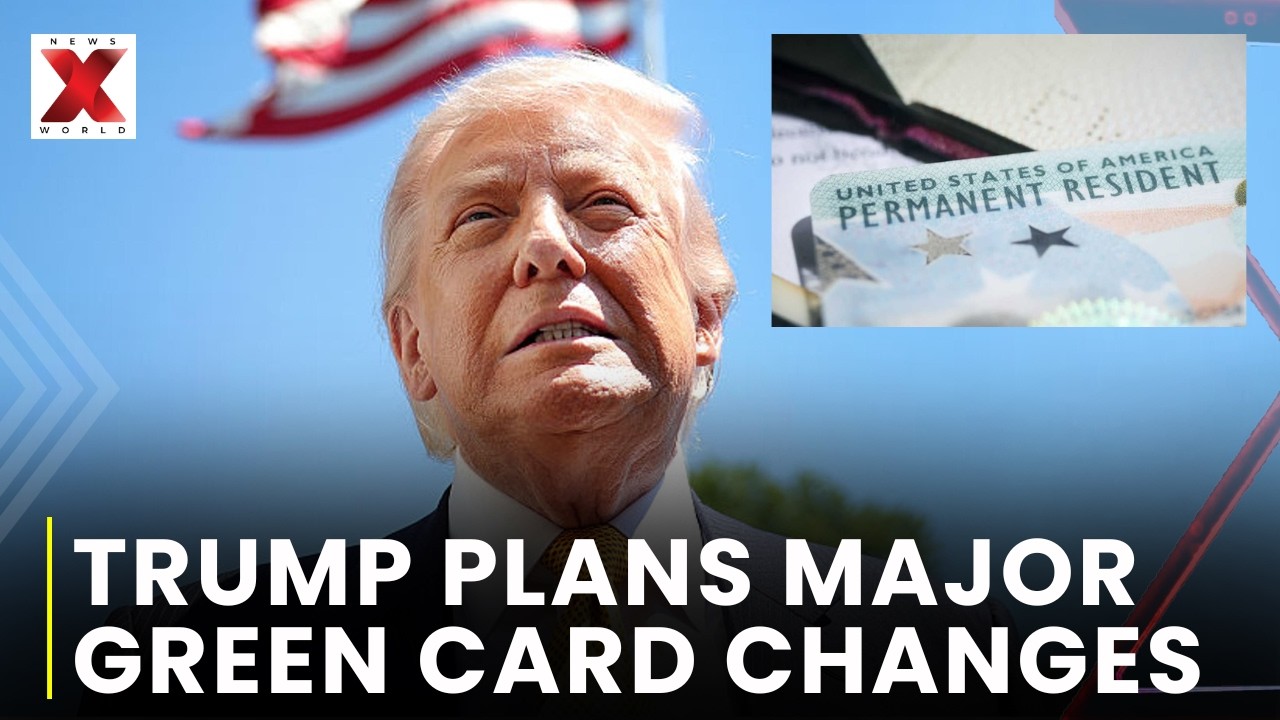
The Trump administration announced last Friday that US visa holders wanting a green card must first return to their home countries and apply from there, with only rare exceptions. US Citizenship and Immigration Services (USCIS) formally laid out this rule in an official memo. The change could force hundreds of thousands of legal immigrants to leave America.
For more than 50 years, visa holders in the United States could remain in the country while applying for permanent residency through a process called "adjustment of status." This mattered greatly. Without this option, some immigrants must wait more than a decade for approval—time they would spend outside America, separated from jobs, families, and homes.
Trump's new rule threatens hundreds of thousands of legal immigrants. This group includes doctors at rural hospitals, engineers at tech companies, spouses of US citizens, and parents of American children. None will automatically qualify for the exception allowing them to stay during their application.
The memo and the administration's public statements contain confusing language. Officials say visa holders can remain in the United States only under "extraordinary circumstances" and that those providing "economic benefit" to America may stay. Yet nearly all employed visa holders contribute economically to the country in some way.
The policy represents the latest and most aggressive escalation of Trump's immigration crackdown. It also settles a fierce internal battle within Trump's political coalition over what "America First" immigration actually means.
Since Trump returned to the presidency in 2024, two camps in his movement have fought over immigration strategy. On one side stand Silicon Valley figures who backed Trump and want a merit-based system. On the other stand hardline nativists who oppose most immigration regardless of skill level.
America's tech industry depends heavily on foreign-born workers. About one-fifth of the nation's STEM workers in 2021 were foreign-born, according to data referenced in the industry's arguments. Tech executives argue America must welcome highly skilled immigrants to remain economically competitive while rejecting undocumented workers and those without specialized skills.
Blake Scholl, CEO of Boom Supersonic and a Trump supporter, expressed this view on X after the announcement. He wrote: "I understand why we don't want people to come to the US to be criminals, mooch on welfare…and otherwise undermine the country. But I don't understand why we make it harder for motivated, ambitious, hardworking people to come to the land of opportunity."
Hardline nativists reject this distinction. They argue that all immigrants, regardless of education or skills, harm native-born American workers. From this perspective, a skilled immigrant taking a software engineering job removes opportunity from an American worker just as much as an undocumented worker does.
By restricting green cards for highly skilled immigrants, Trump has made clear where his administration stands. His choice signals alignment with the nativist camp over the tech right.
This outcome was not guaranteed. During his first term, Trump did create some obstacles to high-skill immigration, but they were limited in scope. More significantly, after numerous tech leaders endorsed Trump's 2024 campaign, Trump appeared to support their immigration goals.
In June 2024, Trump appeared on All-In, a podcast hosted by venture capitalists backing his campaign. When asked if he would "promise us you will give us more ability to import the best and brightest around the world to America," Trump replied: "I do promise. But I happen to agree, otherwise I wouldn't promise. … You graduate from a college, I think you should get automatically—as part of your diploma—a green card to be able to stay in this country and that includes junior colleges too."
Later, Trump's tech supporters clashed with nativist influencers over H-1B visas, which provide temporary legal status to highly educated immigrant workers. Some MAGA figures called for eliminating the program. In response, tech leaders defended it fiercely.
Elon Musk posted on X in December 2024: "The reason I'm in America along with so many critical people who built SpaceX, Tesla and hundreds of other companies that made America strong is because of H1B. I will go to war on this issue the likes of which you cannot possibly comprehend."
Trump initially backed the tech side on H-1B visas, telling reporters: "We need competent people, we need smart people coming into our country…we need a lot of people coming in."
Yet the nativist movement within MAGA long opposed high-skill immigration alongside their focus on undocumented workers. Steve Bannon and Stephen Miller, both original architects of Trump's immigration approach, publicly criticized the number of foreign-born workers in Silicon Valley.
Interestingly, Trump himself did not initially share this view. In a 2015 podcast appearance, Trump told Bannon that he worried about forcing talented foreign-born Ivy League graduates to leave America instead of using their skills. Trump said: "we have to keep our talented people."
Bannon responded by disagreeing. He said: "When two-thirds or three-quarters of the CEOs in Silicon Valley are from South Asia or from Asia, I think…a country is more than an economy. We're a civic society."
Stephen Miller, now a White House adviser, co-authored a document with then-Senator Jeff Sessions calling "The Silicon Valley STEM Hoax" the false idea that America needs more tech-skilled immigrants. The document claimed increasing admissions of foreign-born STEM workers would "deny millions of Americans a shot at a good-paying middle-class job."
Under this logic, skilled immigrants are no more welcome than others—and perhaps less so. Few Americans want seasonal farm labor, but many seek high-paying tech jobs. If job openings are limited, nativists argue, then each immigrant tech worker blocks an American from employment.
Beyond economics, the ethnic composition of Silicon Valley's foreign workforce concerns some nativists. Following the green card policy announcement, anti-Indian sentiment surfaced on right-wing social media. Laura Loomer, a far-right influencer with Trump connections, previously called "third-world invaders from India" a threat to America, a country she described as "built by white Europeans."
Some Republican lawmakers have echoed such resentments. This week, US Representative Greg Steube of Florida referenced the disproportionate number of Indian immigrants in H-1B visas while pushing legislation to eliminate the program.
Before last week, the Trump administration had already leaned toward the nativist position by heavily limiting new H-1B visa issuance. Yet the green card policy change represents a far more decisive rejection of the tech right's vision.
The policy explicitly aims to push most international students out of America once they graduate—the exact outcome Trump had spent years criticizing. Unlike previous H-1B restrictions, which limit temporary workers, the green card memo seeks to reduce the number of permanent foreign-born residents.
This distinction matters. Temporary visa holders depend on their employers to remain legally in the country. Hardline voices across the political spectrum worry that this dependence lets employers exploit them and suppress wages. Immigrants seeking green cards often want to escape that dependence and gain the same rights as US citizens.
The new rules would hit Silicon Valley's predominantly Asian workforce particularly hard. America caps green card issuance by country. Immigrants from large, educated nations like India and China face years of waiting. An Indian tech worker applying for a green card today will likely wait more than 12 years for approval. Under the old system, that worker could remain legally employed in America the whole time. Under Trump's system, they must leave and wait abroad for a decade.
The full scope of Trump's policy remains uncertain. Immigration attorney Cyrus Mehta in New York City told me: "We are hearing USCIS examiners are now asking questions like, 'Why are you applying for adjustment? Why couldn't you have left and applied abroad?' Different local offices will likely take different positions on how to deal with it. Some will be business as usual. Others may be instructed to get tough."
USCIS officers have some discretion in applying the new rules. The memo suggests adjustment of status should be rare but allows exceptions for certain situations. Different regional offices may interpret these instructions differently. This creates a possibility that the tech right could convince the administration to apply the memo narrowly or persuade courts to block it.
Regardless, the policy will likely deter many skilled visa holders from seeking permanent residency. It will also discourage talented people abroad from choosing America over other wealthy nations offering better pathways to permanent residence.
If strictly enforced, the new rules would harm the American tech sector more severely than Biden-era antitrust investigations or AI regulations that concerned Silicon Valley billionaires.
The internal Republican battle over immigration policy has essentially ended. The nativists won. The tech right lost. Their best remaining option is negotiating gentler terms for their defeat.
Reporting incorporates material from a third-party source. Original