UK borrowing costs rise as political turmoil shakes bond markets
Prime Minister Keir Starmer's speech fails to calm investor concerns about government stability, sending 30-year bond yields to 5.65%.
By Robert C. Benoit
12 May, 2026
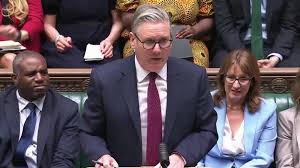
UK government borrowing costs crept higher on Monday after Prime Minister Keir Starmer delivered a speech intended to steady nerves in financial markets. The yield on 30-year UK government bonds rose 8 basis points to 5.65%, up from 5.57% on Friday night. Before Starmer spoke, yields had risen just 5 basis points. The 10-year bond yield also climbed, rising 6 basis points on the day.
When bond yields rise, it means bond prices have fallen. This signals that investors are less willing to buy UK debt, pushing up the interest rate the government must pay to borrow money. The 30-year yield now sits near the 28-year high of 5.78% hit the previous week, a level not seen for a sustained period since the late 1990s.
Political instability lies behind the market movement. Labour MP David Smith said Starmer should set a timetable for his departure and that the government needs "to act faster, and be more radical". Labour MP Catherine West, who announced a challenge to Starmer over the weekend, now wants the prime minister to set a timetable of September for an orderly departure.
Susannah Streeter, chief investment strategist at Wealth Club, said bond markets fear that a change of prime minister would trigger wider turmoil at the top of government and less focus on fiscal rules. She wrote: "Keir Starmer's address to the nation hasn't done the trick of calming bond markets. There is still a sense of jitters playing out as concerns about political instability collide with inflationary fears prompted by the ongoing conflict in the Middle East. His speech was designed to project a 'keep calm and carry on' message, but the worry is that it lacks the real substance needed to keep Labour MPs on side."
Enrique Díaz-Alvarez, chief economist at Ebury, argued that sterling has weathered recent events well, down just 0.2% on the day. He noted that "Investors are betting that Labour's overwhelming defeat will not end Starmer's premiership just yet, but pressure on the prime minister looks set to intensify in the coming days, with a number of backbenchers already calling for his resignation." The pound remained above $1.36, and flat against the euro at €1.156.
Kathleen Brooks, research director at XTB, said the bond market was "relatively stable" after Starmer came out fighting. She explained: "Although the PM faced challenges to his leadership over the weekend, there has been no knockout blow, and so far on Monday, the markets are calm, yields are moderately higher, and the pound remain above $1.36, even though the dollar is higher on a broad basis today."
Starmer used his speech to confirm that the government will nationalise British Steel. He declared: "I can announce that legislation will be brought forward this week to give the government powers [subject to a public interest test], to take full national ownership of British Steel." The move came after British Steel, which employs 3,500 people at its Scunthorpe plant, came under government control last April amid fears its owner, Jingye, was planning to shut down the site. The GMB union welcomed the decision, with Charlotte Brumpton-Childs, GMB National Secretary, saying: "British Steel is a nationally strategic asset, it is right the Government does everything in its power to secure its long term future."
In other market moves, Wall Street opened with caution. The Dow Jones Industrial Average dropped 0.05%, or 35 points, to 49,574 points. The S&P 500 rose 0.15%, and the Nasdaq Composite climbed 0.1%. Investors remained on edge after Donald Trump called Iran's response to a US peace proposal "totally unacceptable", and Tehran said it will retaliate against any new US strikes or foreign warships in the strait of Hormuz. Oil prices jumped 4% on the tensions.
European stock markets also felt the pressure. France's CAC 40 index fell 0.75%, while Germany's DAX lost 0.2%. In London, the FTSE 100 rose 29 points, or 0.3%, with banks and oil companies among the gainers. Bank of England policymaker Megan Greene told Bloomberg's Odd Lots podcast that it is worth waiting "a little while" to see how the Iran war unfolds before deciding whether to raise interest rates. She said: "It's worth waiting for a little while to see what happens with the progression of this war and therefore see what we can infer about how it will propagate through the economy before we make a move."
Separately, at least one in seven UK workers had their employment rights violated between 2023 and 2025, according to a University College London research report. Researchers found that at least 5.4 million workers had faced clear violations of UK employment law, including being paid below the national minimum wage, charged work-finding fees, and not receiving payslips or contracts. The team spoke to a representative sample of more than 4,000 UK workers about their experiences over the two-year period.
The report found that 6.1% were paid below the national minimum wage, a rate four times higher than the previous estimate of 1.6% published by the Office for National Statistics. Low-income workers were particularly vulnerable, with the rate of violations rising to more than one in four (25.6%) for employees from minority-ethnic backgrounds or in non-traditional jobs. Approximately 26 to 28 million people, or 70% of the workforce, have experienced at least one of a broader range of harms, including working extra hours unpaid, physical injuries in the workplace, and bullying or harassment.
UCL professor Ella Cockbain, who co-led the project, said: "Not all breaches of the law are deliberate and not all harmful behaviour is illegal. But the sheer scale of problems identified suggests widespread non-compliance and other harms at work." She added: "The received wisdom that there are a few 'bad apples' among employers is simply not tenable anymore. We found problems across the system, and rights on paper did not necessarily translate into rights in practice. The results call for concerted action to improve worker protections and their enforcement."
The report recommended that the government improve communications about workers' rights and create easier and safer methods for reporting abuses, including multi-lingual communications and safeguards for migrant workers. Since the research period, new legislation under the Employment Rights Act came into force last month, improving conditions for employees and workers, including guaranteed hours and payment for short-notice cancellation of shifts, a ban on fire-and-rehire in most cases, paternity and parental leave from day one, and stronger trade union rights.
In the energy sector, Germany's E.On has agreed to buy British rival Ovo to create one of Britain's largest suppliers. E.On serves nearly one in seven UK households and businesses, while Ovo has four million home energy customers. E.On said existing tariffs will be honoured and service will continue unchanged. Chris Norbury, CEO of E.ON UK, said the deal will create a retailer with "the capability, the technology and the customer base to make 'new energy work for everyone'."
The telecoms regulator Ofcom received more than 100,000 complaints from O2 and Sky mobile customers angry over unexpected price rises. Ofcom said the issue of mid-contract price rises has resulted in an exodus of customers and provoked an angry response from the government. Complaints about O2, the UK's second biggest mobile operator with 12.5 million consumer customers, more than tripled quarter-on-quarter in the first three months of the year. The company, owned by Virgin Media O2, faced a backlash in October when it announced that mobile bills would rise by £2.50 a month for all customers. This was 70p, or 40%, more than the £1.80 increase customers were informed of when they initially signed up to their contracts.
Ofcom said the rate of complaints about O2 soared from two per 1,000 customers in the fourth quarter last year to seven per 1,000 customers in the first three months this year. This works out to almost 87,000 complaints, based on O2's consumer customer base, making the mobile network the most-complained about by some distance. The average across the seven mobile operators tracked by Ofcom was a complaint level of three per 1,000 customers. A customer backlash saw O2 lose 165,000 customers in the fourth quarter last year, with the company attributing about 110,000 of those directly to price increases.
Reporting incorporates material from a third-party source. Original