SpaceX's plan to launch a million AI satellites could cost $2 trillion, experts warn
Rocket engineers say Elon Musk's 2028 target for orbital data centers is financially risky and technically unproven, though Google researchers explore the longer-term possibility.
By Michelle Baier
31 May, 2026
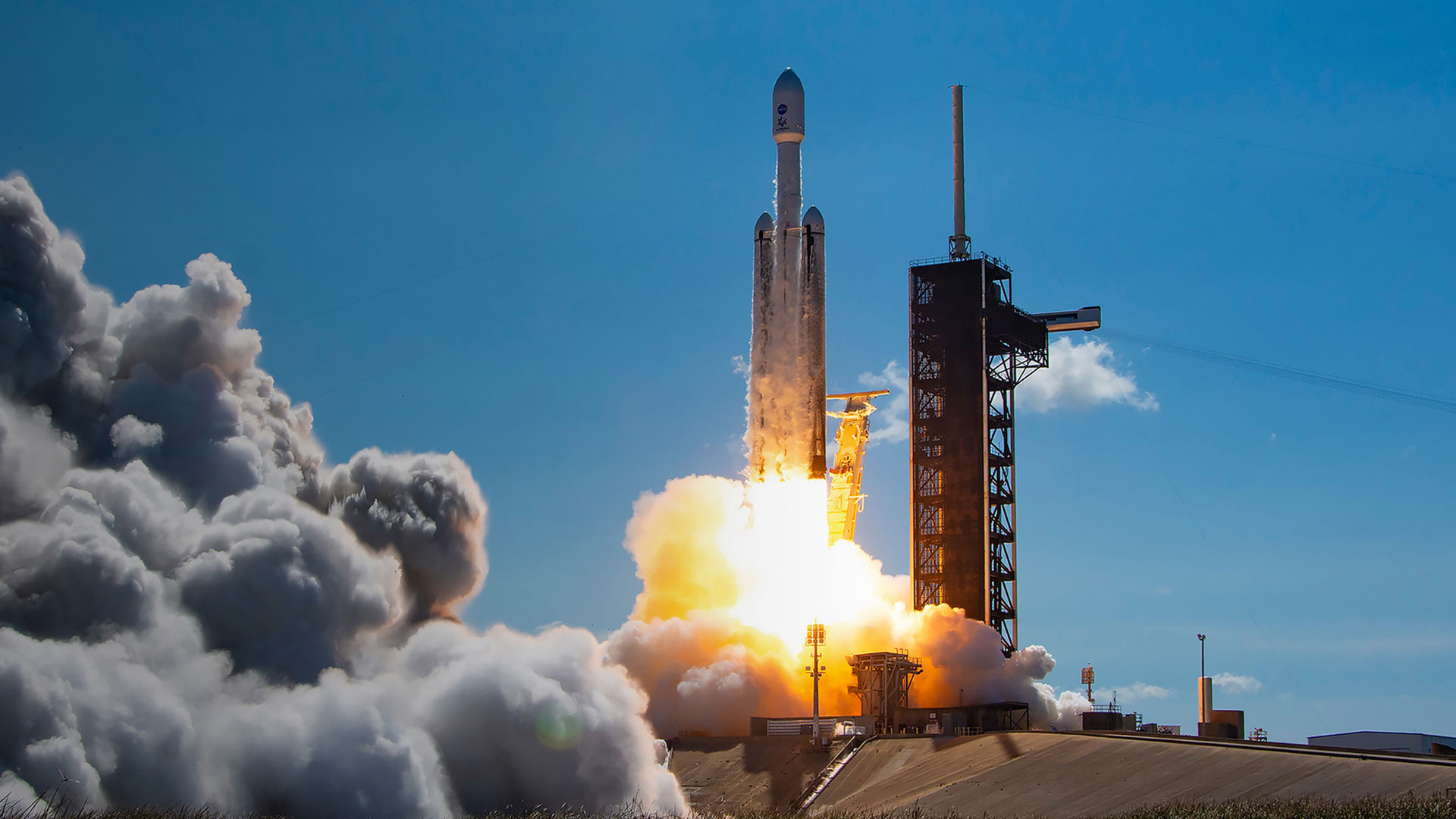
Elon Musk has vowed to begin launching one million AI data center satellites into orbit in 2028 using SpaceX's Starship rocket. The plan would place spacecraft hundreds of kilometers above Earth to host artificial intelligence models like OpenAI's ChatGPT and Google's Gemini. Musk stated on SpaceX's website that the constellation would support "AI-driven applications for billions of people today and ensuring humanity's multi-planetary future."
According to Robert Zubrin, a leading rocket designer who created an early prototype of NASA's Space Launch System Moon rocket, the cost could reach roughly $2 trillion. This figure equals SpaceX's entire projected valuation following its upcoming initial public offering. Each satellite would cost about $2 million to build and launch, mirroring the cost of SpaceX's existing Starlink broadband satellites, of which the company has already launched 10,000.
Zubrin told me in an interview that executing this plan would halt Musk's "long-running winning streak in business." He emphasized that lofting satellites to host next-generation AI models would be far more expensive than building data centers on Earth. Zubrin also wrote an appeal to Musk, published in a magazine article, warning against what he calls a "cosmic boondoggle" that cannot compete economically with ground-based alternatives.
The core problem, according to Zubrin, involves power costs. Musk proposes powering the satellites with solar panels. However, space-based solar panels that generate 20 kilowatts produce electricity costing $100,000 per kilowatt. In comparison, rooftop solar arrays on Earth cost about $3,000 per kilowatt, while gas-fired generators cost roughly $1,000 per kilowatt. Commercial nuclear plants produce power at $5,000 to $10,000 per kilowatt. All terrestrial options are far cheaper than orbital solar power.
Brian Hurley, founder of the New Space Economy think tank, told me that top researchers worldwide have reached a consensus. Orbital data centers customized for AI will not become economically feasible until the mid-2030s at the earliest. Hurley points to a study titled "Towards a future space-based, highly scalable AI infrastructure system design" co-authored by nine Google scholars on AI and spaceflight. These researchers predict AI space stations might only become competitive with terrestrial data centers around the middle of the next decade.
The Google researchers acknowledge that "high launch costs have historically stymied efforts to harvest solar power in space on large scales." However, they also note there is "a feasible path for launch costs to drop sufficiently to no longer be prohibitive." If SpaceX makes Starship fully reusable and cuts the average launch cost to low Earth orbit to $200 per kilogram, they predict "a space-based system could achieve performance roughly comparable to a terrestrial datacenter."
The Google team forecasts that if SpaceX reaches a launch cadence of roughly 180 Starship launches per year, launch prices could fall below $200 per kilogram by around 2035. These researchers describe their work as a "moonshot" exploring the future of space-based AI outposts. They plan to launch twin prototype satellites early next year in partnership with Planet Labs, a leading imagery satellite operator, to test inter-satellite links for an orbiting machine learning lab.
Despite the technical possibility, Hurley emphasized that achieving economic viability requires far more than just matching electricity costs. "It means matching the full delivered cost of computation, including capital expenditures, operating costs, refresh cycles, reliability, financing, insurance, data transport, maintenance, customer acquisition, and risk." He stated these changes would likely require at least a decade to materialize, making a 2028 launch impractical.
Zubrin described Musk's plan as part of a broader tech industry trend. He told me that some investors see AI as sparking a new gold rush similar to the internet boom of two decades ago. "There clearly is gold in the hills of artificial intelligence," with a race to become the ultimate prospector. Zubrin predicted that Musk is using the ambitious satellite plan to amplify SpaceX's IPO prospects. "I think the thing that's driving him right now is the desire to make the SpaceX IPO a big success," Zubrin said. "He's calculating that people are looking at this and saying well I don't know if this is really going to work but you know no one's ever lost money betting on Elon Musk."
SpaceX has achieved remarkable success with its Falcon 9 reusable rocket and Starlink internet satellites, which now serve 10 million people worldwide. The company has become the global superpower in rocket launches, averaging three lift-offs per week in 2025. However, scaling to one launch every hour by 2028 with the still-experimental Starship remains unproven. Musk's prediction that space-based AI compute will be "the lowest cost way to generate AI" within two to three years contradicts the timeline offered by Google researchers and other space experts.
Reporting incorporates material from a third-party source. Original