Trump's China policy reverses what aides predicted for his second term
Rather than focus on Asia as top advisers wanted, the administration is backing down from confrontation with China while deepening involvement in the Middle East.
By Juan C. Stanley
14 May, 2026
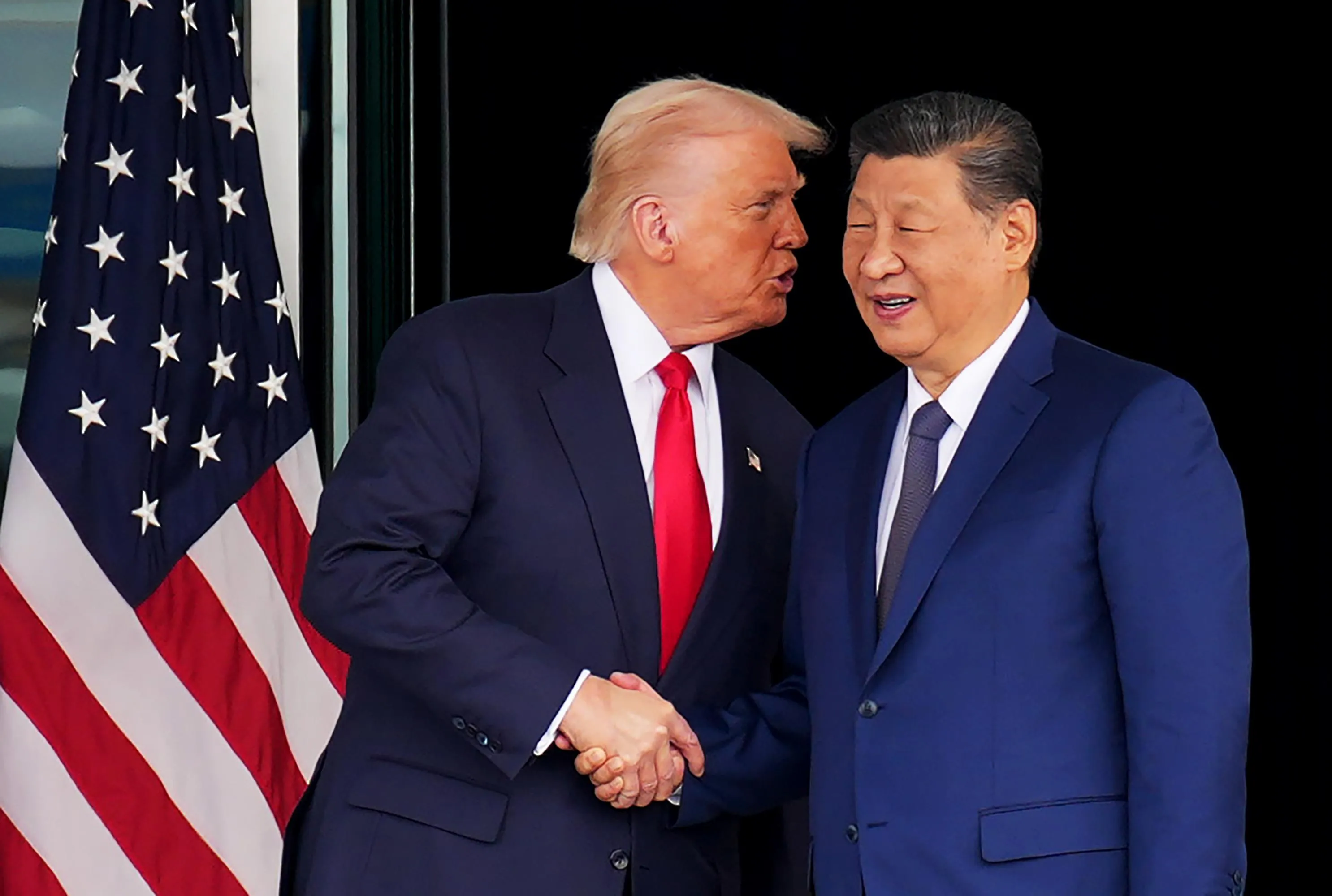
President Donald Trump will travel to Beijing for a summit with Xi Jinping this week. The meeting was originally scheduled for March but was postponed because of the war in the Middle East, which the White House had hoped would be resolved by now. A gathering between the two most powerful leaders in the world normally commands global attention, but this summit is likely to be overshadowed by events in the Persian Gulf.
Many expected Trump's second administration to prioritize confronting China. His top advisers included people who openly argued for reducing US military involvement in the Middle East and focusing resources on countering China's growing military strength. Defense strategist Elbridge Colby, whose 2021 book The Strategy of Denial laid out this approach, holds an influential role in the Pentagon. Both traditional Republicans and Trump loyalists backed this "Asia-first" strategy.
Instead, the administration has done the opposite. It has engaged in a new Middle East war, pulled resources away from the Pacific, and adopted a notably friendly posture toward China. Trump is trying hard to avoid upsetting Beijing. One White House official told Politico last month that the administration is "walking on eggshells" with China in hopes of striking a trade deal. This is surprising given widespread reports that China has provided assistance to Iranian forces that have killed US troops.
Trump himself has never been a traditional China hawk focused on military competition or human rights. His concerns center on trade and economics. In his first term, advisers like Secretary of State Mike Pompeo pushed for a hard line on China and warned that the coming decades would be defined by great-power competition between the US and China. The Pentagon adopted this view, calling it the "pacing challenge" and investing heavily in weapons and systems needed for a potential conflict over Taiwan.
When Trump returned to office, experts expected him to continue or intensify this approach. But according to Patricia Kim, a senior fellow at the Brookings Institution's China Center, "the second Trump administration has gone out of its way to downplay the notion of great power competition." The administration did start with aggressive tariffs on China, reaching as high as 145 percent. When China retaliated with its own tariffs and restricted exports of rare earth metals—materials vital to car and electronics makers—the White House backed down. A February Supreme Court ruling also limited the administration's ability to unilaterally impose tariffs.
Jeremy Shapiro, research director at the European Council on Foreign Relations, offered a straightforward explanation: "Trump is kind of a bully, and bullies don't like to have even fights." China showed it could strike back, and the US position weakened.
The administration has made some moves in line with the "prioritizers" strategy. It substantially cut aid to Ukraine and completed the withdrawal of US troops from Syria. But it also took on new military commitments in Latin America and expanded counterterrorism operations in places like Somalia. The 2025 National Security Strategy emphasized threats from "woke governments" in Europe more than authoritarians in China, a stark shift from the 2017 version that announced the era of great-power competition.
The current Middle East war has consumed vast quantities of advanced weapons. Tomahawk cruise missiles, Patriot interceptors, THAAD air defense systems, and an aircraft carrier strike group have been diverted from the Indo-Pacific. A former senior US official told reporters last week: "We have patiently accumulated these capabilities [in the Pacific] over time. It has now been vacated. It is all back in the Middle East." Zack Cooper, a senior fellow at the American Enterprise Institute, said the second Trump administration has been "more engaged outside of Asia than any administration has been in at least a decade."
The US has repeatedly promised to shift focus to Asia. Wall Street Journal reporter Alex Ward recently joked that the "pivot to Asia is the U.S. foreign policy version of 'infrastructure week.'" The former official explained that executing an Indo-Pacific strategy requires discipline within the government system. Yet many thought this particular president, who criticized the Iraq and Afghanistan wars in 2016, would avoid another open-ended Middle East conflict. His team includes veterans of those wars: Vice President JD Vance, Defense Secretary Pete Hegseth, and Director of National Intelligence Tulsi Gabbard.
The shift reflects Trump's own worldview more than his advisers' preferences. Trump sees Xi as a peer with whom he can make deals, not a rival to defeat in a contest for global dominance. According to Cooper, "the idea that the administration was going to prioritize Asia was something that was pushed by a number of people, especially on the defense side. The problem ultimately is that the president of the United States doesn't share that view."
Shapiro noted that Trump doesn't fit neatly into any of the three foreign policy camps within his administration—the traditional hawks, the restrainers who want less involvement abroad, or the Asia-firsters. Unlike past presidents who relied mainly on advice from their own officials and intelligence agencies, Trump often values counsel from outsiders he considers equals. This includes foreign leaders like Israel's Benjamin Netanyahu, who effectively made the case for the Iran war, and business leaders like Nvidia CEO Jensen Huang, who advocated for easing chip export restrictions to China.
In Washington's China-watching circles, Trump is often described as his own China "desk officer." His policies rest on his personal instincts rather than conventional analysis. This makes his approach harder to predict than that of previous presidents who were more constrained by their advisers. Understanding where the US-China relationship is heading requires focusing less on what Trump's team believes and more on what Trump himself decides.
The US-China relationship is not entirely smooth. The two countries dispute control over interests in the Panama Canal and remain locked in legal and diplomatic disagreements. The White House has accused China of "industrial-scale campaigns" to steal artificial intelligence advances. Washington still views a potential military conflict with China as a centerpiece of military planning and doctrine, even if White House rhetoric has softened.
Patricia Kim of Brookings said: "I don't think the Chinese are counting on the US leaving their sphere of interest. If anything, I think they see strategic encirclement as increasing." Chinese leaders likely recognize that with the Iran war not progressing as planned, Trump may feel pressure to claim a global victory. This could make him willing to concede ground to secure a trade deal or other agreement with Xi. In February, Trump suggested he was discussing potential arms sales to Taiwan with Xi, alarming officials in Taipei. The White House has delayed approval of roughly $15 million in Taiwan military sales until after the summit to avoid offending Beijing.
Xi may push Trump to make an explicit statement opposing Taiwanese independence, reversing decades of deliberate US ambiguity on the issue. Such a move could embolden political factions in Taiwan favoring a more conciliatory approach to mainland China. Even Elbridge Colby, the architect of the Asia-first strategy, now argues that Taiwan is "very important" but not "essential" to preventing Chinese regional dominance.
The Beijing summit is being scaled back compared to Trump's 2017 visit. He is bringing fewer US CEOs, and the Chinese are not billing it as a "state visit plus" but rather a standard summit. It may yield investment deals and statements on issues like fentanyl and AI governance. The administration has asked China to help resolve the crisis in the Strait of Hormuz, but Beijing has shown little interest in deeper Middle East involvement.
US allies in Asia are watching closely. Ali Wyne, a senior researcher on US-China relations at the International Crisis Group, said: "Given President Trump's criticism of wars of choice, and given the Asia-first orientation of some of his advisors, if even this administration is finding itself bogged down in the Middle East and distracted from the Indo-Pacific, I think a lot of allies and partners will conclude that the United States has a propensity for distraction, is fundamentally unreliable, and they're going to have to make calculations accordingly."
The summit may ultimately underscore a broader reality: despite talk of an Asian century, the US remains persistently entangled in the Middle East. Under this president, that pattern is unlikely to change.
Reporting incorporates material from a third-party source. Original