NASA plans urgent rescue of aging Swift space telescope with private spacecraft
A private spacecraft called Link will attempt to boost NASA's Swift Observatory to a higher orbit before atmospheric drag pulls it back to Earth, but first teams must predict exactly where the telescope will be.
By Leo Hart
29 May, 2026
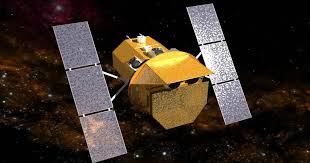
NASA's Neil Gehrels Swift Observatory has been hunting for gamma-ray bursts since its 2004 launch. The spacecraft remains in good working order, but it faces a growing problem: Earth's atmosphere is dragging it downward with no way to fight back. The telescope has no fuel or propulsion system to save itself.
A private spacecraft called Link is set to launch in June to perform an unprecedented rescue. Built by Arizona-based Katalyst Space Technologies, Link will attempt to rendezvous with Swift in low Earth orbit and push it to a higher, safer altitude. If successful, this will be the first time a private spacecraft has captured a robotic satellite operated by the U.S. government.
Timing the rescue depends on solving a major puzzle: where exactly will Swift be when Link arrives? Earth's atmosphere expands and contracts based on solar activity. The sun follows an 11-year cycle that peaked in 2024, causing intense space weather that accelerated Swift's descent. Early 2025 modeling predicted the telescope would reenter Earth's atmosphere by summer 2026.
That dire forecast prompted NASA to fund the $30 million Link mission through a contract with Katalyst. Now teams at NASA's Goddard Space Flight Center generate weekly orbital predictions for Swift using data from the U.S. Space Force, solar research from NASA, and the National Oceanic and Atmospheric Administration's Space Weather Prediction Center. Michael Shoemaker, deputy flight dynamics lead at Goddard, explained: "These predictions evolve over time, based on space weather forecasts and other factors like Swift's current height and orientation."
The Swift mission team uses these predictions to make critical decisions. They halt science observations when necessary and adjust the spacecraft's orientation to reduce atmospheric drag. Russell Carpenter, deputy project manager at NASA's Space Science Missions Operations, noted: "We're also working on predictions for where Swift will be when Link is set to launch in June aboard a Northrop Grumman Pegasus rocket." This innovative approach has slowed Swift's orbital decay, allowing it to remain above 185 miles (300 kilometers) altitude—the minimum height needed for Link's mission to succeed—into early fall.
The effort has drawn wide support. Carpenter added: "The project to re-boost Swift has generated intense interest across the flight dynamics community. The Swift team is grateful that so many people have been willing to pitch in to help with refining these predictions." Despite the challenges, this groundbreaking mission offers a potential blueprint for rescuing other aging satellites in the years ahead.
Reporting incorporates material from a third-party source. Original