Scientists extract oxygen from simulated lunar soil using concentrated sunlight
Researchers in France have demonstrated a method to pull oxygen directly from moon dust, a breakthrough that could reduce the need to ship supplies from Earth for future lunar bases.
By Eloise Blake
31 May, 2026
The United States and China are competing to return humans to the moon. Unlike the Apollo missions of the 1960s and 1970s, the new goal is not just to visit and leave. Instead, both nations want to build bases where people can stay for long periods. These bases would serve as testing grounds for technology needed to travel even farther, particularly to Mars.
One critical technology is called in-situ resource utilization (ISRU). This means using materials found on the moon to make things astronauts need: oxygen, water, rocket fuel, and building materials. If these resources can be produced on the moon itself, spacecraft won't need to carry them from Earth. This would cut both the weight of cargo and the cost of missions dramatically.
The moon's surface is covered with regolith, a layer of soil made of rock fragments and dust. This material contains about 40 to 45 percent oxygen by weight, making it the most abundant element on the lunar surface. However, the oxygen is chemically bound to other elements like silicon, iron, and calcium in compounds called oxides. Scientists must break these bonds to release the oxygen gas.
Researchers at the Laboratory of Processes, Materials, and Solar Energy (PROMES-CNRS) in France have been testing a method called solar vacuum pyrolysis. This process uses mirrors or lenses to focus sunlight onto a small area, creating intense heat. The moon's lack of atmosphere works in favor of this method. With no air to block sunlight or interfere with chemical reactions, the process becomes simpler and requires less energy than it would on Earth.
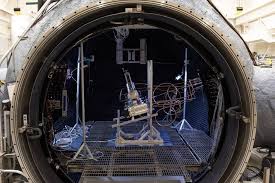
The laboratory is located at Odeillo in the French Pyrenees, home to the world's largest solar furnace. There, researchers use parabolic mirrors two meters across that can concentrate sunlight 10,000 times onto a spot about 2 centimeters wide. These mirrors generate temperatures exceeding 3,000°C. In their experiments, they place samples of material that mimics lunar regolith inside a vacuum chamber and heat them with this concentrated sunlight.
During testing, the simulated regolith was heated to around 2,000°C. At these temperatures, the oxides in the soil began to break down and release oxygen gas. From a 3.38-gram pellet, researchers extracted 35 milligrams of oxygen. Though this represents only about 1 percent of the sample's total mass, or 2.5 percent of the oxygen it contained, it proved the concept works. After the process, the sample turned into a glass bead instead of remaining as dust.
The technique also produces useful byproducts. As volatile minerals escape during heating, they condense on the cold walls of the reactor. These condensed materials could potentially be used to make structures, tools, or construction materials directly on the moon. This would help future lunar missions become more independent and reduce their reliance on Earth shipments.
The current method still has room for improvement. Researchers plan to lower the pressure inside the reactor to match actual lunar conditions more closely. Lower pressure should reduce the temperature needed for the reaction and allow more of the regolith to vaporize, increasing the amount of oxygen produced. They also want to test different types of actual lunar soil samples and individual minerals to better understand the chemistry involved.
Other challenges remain before this technology can work on the moon. The equipment must survive extreme conditions: abrasive dust, radiation, and temperature swings between sunlight and shadow. The oxygen produced must be stored, purified, and efficiently used. Planners must also figure out how to supply the reactor with regolith and manage the material after it has been processed.
Solar vacuum pyrolysis has clear advantages for the moon. It uses energy that is naturally abundant there—sunlight—and takes advantage of the lunar vacuum that already exists. The method requires few materials brought from Earth. Tests at Odeillo have shown the idea is feasible. Although yields need to improve and technical hurdles remain, this research points toward a future where the moon supplies some of its own oxygen and materials, making sustained human presence there practical and affordable.
Reporting incorporates material from a third-party source. Original