Ferrari's first electric car faces a wave of criticism over its radical new look
The Luce, designed by Apple's Jony Ive, has drawn backlash from investors, politicians and car fans who say it abandons Ferrari's identity.
By Anna Andrade
31 May, 2026
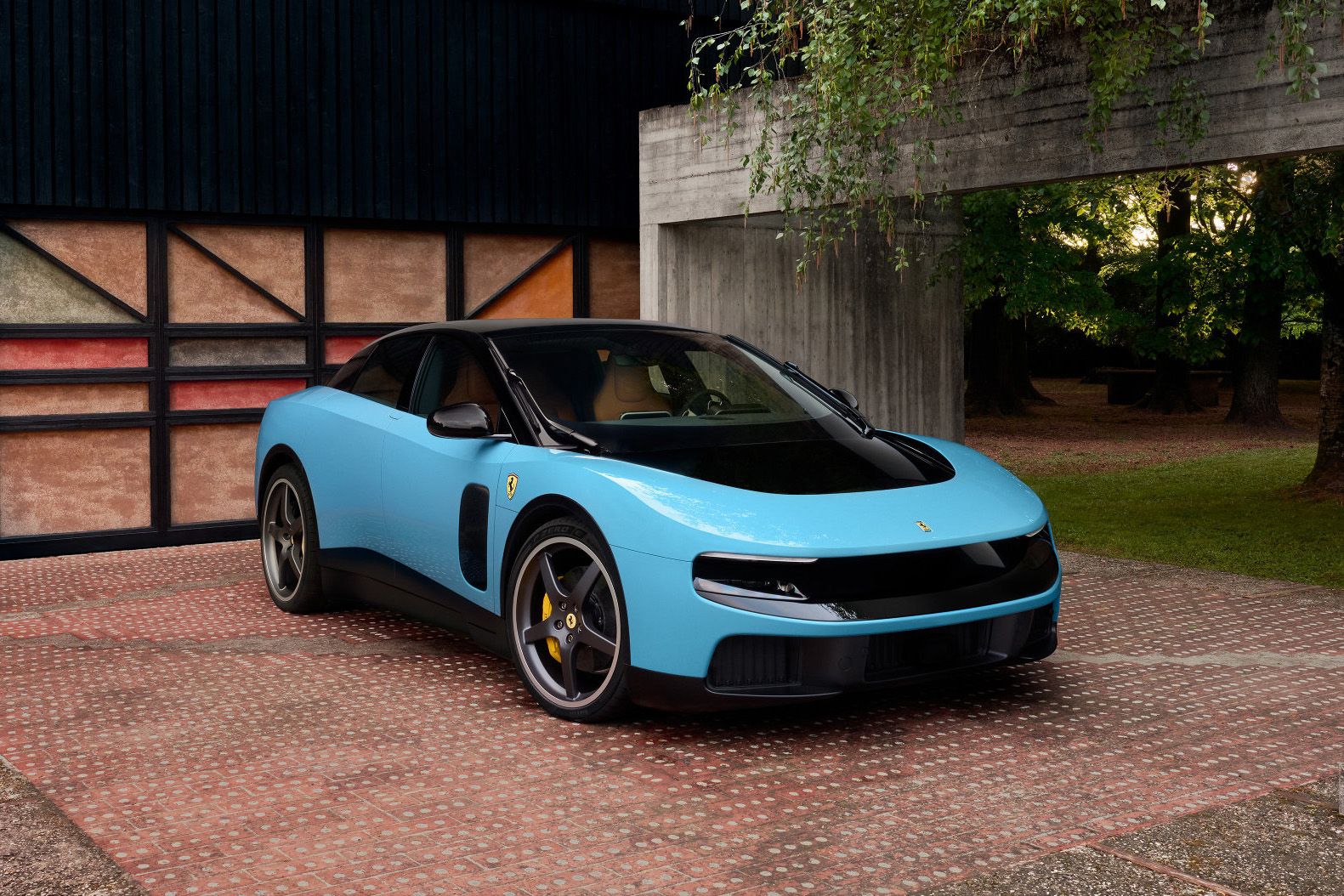
Ferrari has launched the Luce, the Italian luxury carmaker's first all-electric vehicle, designed by Sir Jony Ive, who previously created iPhones for Apple. The Luce—Italian for "light"—marks a major departure from Ferrari's tradition of sleek, petrol-powered supercars with distinctive engine noise. The car's unveiling was significant enough that Italian President Sergio Mattarella and Pope Leo were invited to view it.
The Luce performs like a traditional Ferrari supercar. It accelerates from 0 to 60 miles per hour in roughly 2.5 seconds and reaches speeds over 190 miles per hour. Yet its appearance has become the main source of controversy. The car lacks the low-slung profile typical of Ferrari models and, as an electric vehicle, produces no roaring engine sound.
Luca Cordero di Montezemolo, Ferrari's former chairman, told reporters on Tuesday that the Luce is "risking the destruction of a legend." He urged the company to remove its iconic badge from the vehicle. Shaun Baker, an Australia-based high-end car dealer who has owned more than 50 Ferraris, told the BBC he calls the Luce—pronounced "loo-chay"—the "Loser." He said, "Ferrari was the aspirational brand to own. But with the Luce, they've hurt their image."
Italy's deputy prime minister and transport minister, Matteo Salvini, questioned the design on Tuesday. "This is supposed to be innovation? I wonder what Enzo Ferrari would say," he said, referencing the company's founder. He added that the Luce "looks like anything but a car from the prancing horse," Ferrari's symbol. Online responses have ranged widely. While some praised it as a "masterclass" of design, others called it an "abomination." Some social media users created AI-generated versions of the car with sportier appearances and claimed those designs looked better than Ferrari's final product.
Ferrari boss Benedetto Vigna pushed back against comparisons to cheaper electric vehicles, including the Nissan Leaf and Chinese models. James Wong, a Singapore car analyst, praised the Luce's interior design but said the overall car is "unrecognisable" as a Ferrari. Jessica Cheam, a sustainable industry expert, highlighted the car's "eye-popping price tag," calling it particularly expensive given the increasingly cheap and luxurious electric vehicles available on the market. Vigna responded by saying the price reflects the innovation in the car and that it has received strong buyer interest.
Vigna has led Ferrari for five years and has managed controversy before. The Purosangue, Ferrari's first sports utility vehicle launched in 2022, also divided opinion. Critics worried the four-door model would damage Ferrari's image as an exclusive supercar maker. However, it sold well and opened a new market for the company. Ferrari faces similar questions today about whether the Luce represents necessary evolution or a loss of identity.
Other carmakers have also struggled with the shift to electric vehicles. Jaguar faced backlash when it unveiled the Type 00 concept car in 2024, a departure from its classic E-Type design. The company's boss, Rawdon Glover, told the BBC at the time that "Jaguar needs to be bold and disruptive in order to cut through and get our message across." Meanwhile, rival supercar maker Lamborghini scrapped its all-electric vehicle programme due to weak demand and customer preference for petrol engines. Lamborghini's boss, Stephan Winkelmann, told CNBC that focusing on hybrid cars rather than all-electric models was "the right way to go." Porsche, Honda and Ford have also scaled back their electric vehicle programmes.
Ferrari's move into electric vehicles comes as Western carmakers face intense competition from Chinese companies. China is a major market for luxury brands, and buyers there expect low prices, long battery ranges and innovative features. The International Energy Agency reports that China's vast supply chains for electric vehicle parts reduce production costs by at least 30 percent compared to the rest of the world. Chinese electric vehicle makers have begun targeting the premium market, competing directly with Porsche and Tesla's high-end models. BYD, a Chinese company better known for SUVs and saloons, released the all-electric Yangwang U9, priced at $250,000. It accelerates from 0 to 60 miles per hour in just over 2.3 seconds. Western carmakers, including Tesla and Volkswagen, have already slashed prices in China to remain competitive.
Ferrari's strategy with the Luce targets a different customer base than traditional supercar buyers. Jessica Cheam noted that the Luce could appeal to younger, environmentally conscious customers more open to electric vehicles than Ferrari's traditional fans. James Wong suggested that the unfamiliar design might actually attract new customers to the brand. Wong added that Ferrari could have benefited from a "dipstick test" with loyal customers to gauge their reaction to such a radical design. However, he noted that "all this could have been intentional, given the huge media storm that the Luce has attracted."
Reporting incorporates material from a third-party source. Original