Federal judge allows voter list executive order to move forward
A Trump-appointed judge ruled that civil rights groups and Democrats lack the legal standing to block an order that could restrict mail-in voting and create federal voter rolls.
By Jan Kupka
29 May, 2026
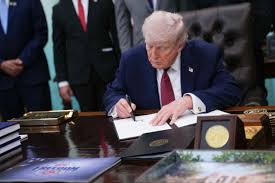
A federal judge in Washington, D.C., ruled early Thursday that civil rights groups and the Democratic Senatorial Campaign Committee lack legal standing to challenge an executive order targeting mail-in voting and voter rolls. Judge Carl John Nichols said the groups have not yet suffered harm because no federal agency has acted on the order.
The March executive order directs the Department of Homeland Security to compile lists of citizens aged 18 and older who live in each state. It also requires the U.S. Postal Service to add specific design elements to mail-in ballots and send them only to people on state-specific voting lists. Election experts worry the lists will contain mistakes and could be used to remove eligible voters from rolls.
In his ruling, Nichols wrote: "Given that the Executive Order does not command Plaintiffs to do anything, and that no agency has yet acted pursuant to the Order in a way that could harm Plaintiffs, they have not suffered any harm at present, much less harm that is 'certain,' 'great,' and imminent." The judge echoed the Trump administration's argument that it is too soon to sue.
The Democratic groups and civil rights organizations argued that President Trump violated the Constitution by issuing the order. Article 1 of the Constitution gives only Congress and state legislatures power to set rules for federal elections, they said. They also contended the U.S. Postal Service has no authority to regulate mail-in voting.
Nichols expressed doubt about whether voters and voting groups could ever successfully challenge the order. He called potential harms to voters "too attenuated" and wrote that it remains "speculative whether the State Citizenship Lists, if and when they are initially compiled, will contain inaccuracies." His reasoning leaves unclear who would have the legal right to challenge the order at all.
A similar case is pending in federal court in Massachusetts, with a decision expected by early June. Earlier federal courts blocked a separate Trump executive order requiring proof of citizenship to vote. Multiple federal courts had already taken that step when Trump issued the earlier order.
Reporting incorporates material from a third-party source. Original