Ebola researchers in US unable to help Congo outbreak after funding cuts
A network of disease research centers lost NIH support last year, leaving scientists unable to assist with testing and surveillance as the outbreak spreads.
By Brooke Holland
29 May, 2026
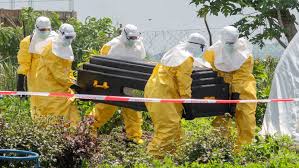
An Ebola outbreak spreading rapidly in the Democratic Republic of Congo has left a key group of US-based researchers unable to respond on the ground. The Centers for Research in Emerging Infectious Diseases (CREID) Network, funded by the National Institutes of Health, received a stop-work order last June that halted its operations.
The NIH established CREID in 2020 to study viruses that jump from animals to humans. The network ran 10 research sites worldwide in regions where such outbreaks occur, including Central and East Africa. It received approximately $82 million in funding over five years, with renewal scheduled for 2025.
In June, the network was told its research was deemed "unsafe for Americans and not a good use of taxpayer funding," and that the agency's priorities had shifted. Kristian Andersen, an evolutionary virologist at Scripps Research in California, led one of two CREID centers in West Africa. He says the decision blocks work that the nation needs. "We sit here in San Diego and see this unfold," Andersen told Wired.
Andersen's center had developed diagnostic tests and conducted genetic sequencing of Ebola viruses to track how the disease spreads and evolves. Robert Garry, a microbiology professor at Tulane Medical School who co-led the West African center with Andersen, said "the whole network would have mobilized" to help. Without funding, neither researcher can offer testing or sequencing support to the outbreak response.
The current Congo outbreak is caused by the Bundibugyo virus strain, but public health workers on the ground are using tests designed to detect the more common Zaire strain from past outbreaks. The CREID centers had been developing reagents and diagnostic tests that could address this gap. The network also had an active site in Nairobi, Kenya that focuses on infectious diseases and played a key role in responding to a September 2022 Ebola outbreak in Uganda, where rapid case detection and contact tracing ended the outbreak in four months with 164 total infections and 55 deaths.
The funding cuts appear linked to conspiracy theories about Covid-19's origins. One CREID center was run by EcoHealth Alliance, a nonprofit that drew scrutiny because of its ties to the Wuhan Institute of Virology. In January 2025, the Department of Health and Human Services permanently barred EcoHealth Alliance from receiving federal funding. The White House also cited EcoHealth's Wuhan connections when dissolving a US Agency for International Development program.
The current Congo outbreak has already resulted in at least 1,000 suspected cases and 238 suspected deaths, with seven confirmed cases and one death reported in neighboring Uganda. M. Kariuki Njenga, a virologist at Washington State University who led CREID's East and Central Africa center, says the network would have been part of the response. "We had active studies there," he said. "We were covering Eastern and Central Africa. We would have been there."
Tedros Adhanom Ghebreyesus, director-general of the World Health Organization, expressed alarm at the outbreak's speed this week during an African Union meeting. "We are urgently scaling up operations," he said, "but at the moment the epidemic is outpacing us."
Reporting incorporates material from a third-party source. Original