Cuba faces energy crisis as US weighs diplomatic or military response
The indictment of former Cuban leader Raúl Castro signals a potential shift in US policy, but experts say negotiation could yield faster results than confrontation.
By Rachel Reginald
28 May, 2026
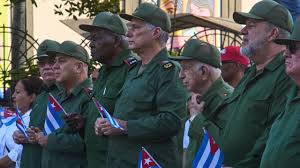
The United States indicted former Cuban President Raúl Castro, 94, in federal court last week. The charges against Castro and five others relate to the shooting down of two small planes over Cuba in 1996, which killed four people—three of them US citizens. The indictment marks one of the most forceful US actions against Cuba since the Cold War ended.
Cuba is currently gripped by an energy crisis. The country has almost no oil for regular use after the US pressured Venezuela to halt oil exports. Blackouts now affect homes, hospitals, and businesses across the island. To cope, the Cuban government cut the work-week to four days for state-owned companies and shortened school days. Universities have dropped in-person attendance requirements.
This economic pressure has sparked questions about US intentions. Some observers wonder whether the Trump administration plans to invade Cuba or use the same strategy it pursued against Venezuelan President Nicolás Maduro. Cécile Shea, a Cuba expert at the Chicago Council on Global Affairs, offered a different view in remarks to the podcast Today, Explained. "For the last 50 years or so, the US has ensured that no country — other than a couple that the US didn't hold sway with, such as Venezuela — [would] export oil to Cuba," Shea said. "Now that Venezuela is also not exporting oil to Cuba, it means that they're out of oil, and that's completely on us."
Secretary of State Marco Rubio released a Spanish-language video last week addressing Cubans directly. In the message, Rubio blamed Cuba's government for the energy crisis, not US sanctions. He told Cubans their leaders had mismanaged the country and that they should pressure their government to step down. However, Shea disputed this framing. She said Cuba's government has real problems, but the immediate crisis stems from US actions against Venezuela, not mismanagement alone. She noted that anyone in Cuba listening to Rubio's speech would know the US embargo played the larger role.
Behind closed doors, Cuba may be signaling willingness to negotiate. According to press reports, the Cuban government has offered to release political prisoners—a move that could create a domestic opposition. Cuba has also indicated it would open its economy, allow exiles to return, and permit other reforms. These are demands the US has made for decades. Shea argued the Trump administration should accept these concessions and push for free elections within two years. "That would just make so much sense, and we wouldn't be talking about the military, and we wouldn't be talking about going in and kidnapping 94-year-old men," she said.
Trump has long wanted to achieve what no US president since Eisenhower has managed: overthrowing Cuba's communist government. Eisenhower and President John F. Kennedy both attempted such action. Shea suggested Trump could become the president to finally accomplish this goal, but through negotiation rather than force. "He has the attention of the people in charge of Cuba," Shea said. "We have a lot of leverage there. The government of Cuba these days seems willing to listen to us and to do some of the things that would keep us happy."
Shea noted that younger Cubans want their government to open relations with the United States and move beyond what she called "revolutionary Cuba." Newer Cuban emigrants to the United States also appear less interested in Cold War conflicts. "There's some evidence that among that million and half or so émigrés, they really want to move forward. They're really not interested in fighting the wars of the 1960s anymore," Shea said. However, older Cuban Americans may still pressure the Trump administration to take a harder line against the Castro regime.
The short-term risk of a military approach is that it could leave Cuba worse off than now. The long-term danger is more serious: military action would deepen Cuban resentment of the US and damage prospects for a healthy relationship with a country only 90 miles away. Shea warned that the US should consider what kind of relationship it wants with Cuba 15 or 40 years from now. "Invading the country is not a way to make the odds of having a good relationship in the future strong," she said.
Shea argued that ordinary Americans should consider the practical benefits of normalizing relations. The US could allow sales of spare parts Cuba needs, permit tariff-free vehicle imports, and restore tourist travel. These steps would help ordinary Cubans and benefit American businesses and travelers. The alternative—military action—would send more young Americans into danger, worsen the US image abroad, and deepen Cuban suffering. "There are people who can't get kidney dialysis right now because the hospitals are running out of oil," Shea said. "Are we really going to let this kind of pain and suffering continue through the hottest part of the year?"
Reporting incorporates material from a third-party source. Original