Climate change may make giant hailstones more common in some regions
A new study predicts that warming temperatures will allow hailstones to grow larger in areas farther from the equator, while tropical regions may see less hail damage.
By Peter Walton
29 May, 2026
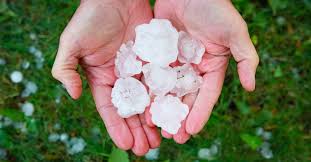
On April 28, a severe hailstorm struck Springfield, Missouri, dropping ice chunks as large as grapefruits. The giant hail destroyed cars, damaged homes, and injured people and animals. Such destructive storms are occurring more often, according to new research.
A team of meteorologists at Peking University in Beijing built a computer model to forecast how hail will change in a warming world. They tested the model against more than 14,000 real hailstorms recorded between 2014 and 2021, then used it to predict how those storms might behave under future climate conditions. Their findings were published May 27 in Nature.
The research identifies two competing effects. Warmer air holds more water vapor, giving hailstones additional material to grow larger. However, as the atmosphere warms, hailstones must fall through a thicker layer of warm air that can melt them before they reach the ground. "Large hailstones melt too, but they can still reach the ground as sizable chunks of ice," says Qinghong Zhang, the meteorologist who led the study. "Smaller hailstones are affected more. They may melt completely and turn into raindrops."
The danger will not affect all regions equally. Places farther from the equator face a greater risk of larger hail, while tropical and subtropical regions may actually experience less hail damage. Shiyi Zhang, also of Peking University, explains that temperatures are expected to rise more sharply at higher latitudes by the end of this century. This extra warming can strengthen updrafts inside storm clouds, allowing hailstones to grow bigger.
Climatologist Davide Faranda of the French National Center for Scientific Research says the study makes a valuable contribution to understanding climate change and hail hazards. However, he cautions that hail is an extremely local phenomenon. Global climate models cannot explicitly resolve individual hailstorms, which introduces uncertainty into regional forecasts. Qinghong Zhang acknowledges these limits but notes that the team tested its results against hailstorms recorded over several decades in China and the United States, suggesting the uncertainties are manageable.
The clear takeaway from the research is straightforward: if global temperatures continue to rise, larger and more damaging hail will likely become a greater threat in many regions of the world.
Reporting incorporates material from a third-party source. Original