Are robots on the verge of changing everyday life?
A robot in Beijing recently beat the human world record in a half marathon, raising questions about when AI machines will enter homes and workplaces.
By Jett Bull
28 May, 2026
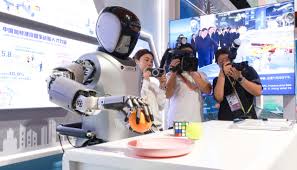
A robot called Lightning won a half marathon in Beijing last month, finishing nearly seven minutes faster than the human world record. The achievement is the latest sign that artificial intelligence is advancing rapidly in the real world, much like chatbots have done in recent months.
China is leading the robotics push globally. The Chinese government has pledged to invest more than £100bn in robotics over the next 20 years. This spending reflects the country's ambition to build machines that will work alongside humans in factories, offices, and homes.
Robots are already entering workplaces in limited roles. However, getting them to perform everyday tasks—like cleaning homes or weeding gardens—requires solving a major challenge: robots need to develop human-like dexterity and the ability to handle objects with care and precision.
According to the Guardian's senior China correspondent Amy Hawkins and Nathan Lepora, professor of robotics and AI at Bristol University, much technical work remains. Lepora's research focuses on how robots can achieve the kind of fine motor control that humans take for granted.
The question now is how quickly these obstacles will be overcome. If progress continues at current rates, robots could become commonplace in homes and gardens within the next decade, reshaping work and daily life as fundamentally as the internet did.
Reporting incorporates material from a third-party source. Original