1,200-year-old gold hoard found in Saudi Arabia may be lost pilgrim's treasure
Archaeologists unearthed jewels and precious metals in a clay pot at Diriyah, a medieval rest stop on the hajj route to Mecca.
By Polaris Newsroom
28 May, 2026
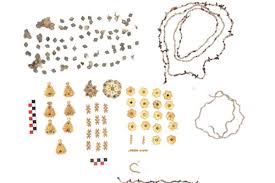
A team of archaeologists working in Saudi Arabia has unearthed a clay pot containing gold, silver, and jewelry studded with gemstones. The discovery may reveal how an Islamic pilgrim lost or hid his valuables more than 1,200 years ago.
The archaeologists named the find the "Diriyah Treasure" after the site where they uncovered it. Diriyah lies on the outskirts of Riyadh and served as a crucial waystation on the hajj route. Pilgrims traveling from Basra, Iraq, to Mecca, Saudi Arabia, would have passed through Diriyah.
The Saudi Heritage Commission has been digging at Diriyah for six years. Using radiocarbon analysis of organic material, the team determined that the main settlement at the site dates to between 743 and 753.
The timing aligns with the early Islamic period, when pilgrimage traffic along this route was heavy. A pilgrim traveling the long journey to Mecca may have buried the pot for safekeeping, planning to retrieve it later—a plan that never came to pass.
The hoard provides a rare glimpse into the wealth and travel practices of medieval Islamic pilgrims. Experts continue to study the artifacts to learn more about who may have owned them and why they were abandoned at this ancient stopping point.
Reporting incorporates material from a third-party source. Original