Palestinian leader's son positioned for top role, angering those seeking fresh leadership
Yasser Abbas, who has no political background, is meeting with senior officials and expected to seek a party committee seat, prompting accusations of dynastic succession.
By By: Brenda J. Ouellette
10 May, 2026
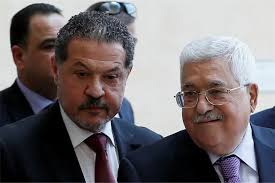
Palestinian Authority officials have begun publicising meetings between Yasser Abbas, the 64-year-old son of PA President Mahmoud Abbas, and senior government figures. These announcements have sparked widespread speculation that the younger Abbas is being prepared to take his father's position after the 90-year-old leader eventually steps down.
Yasser Abbas holds no formal post within the Palestinian Authority and has spent most of his adult life outside the West Bank, primarily in Canada. He has never held elected office or played a role in Palestinian politics. Yet in recent weeks, official statements have documented his meetings with the Palestinian police commander, the governor of the Palestinian central bank, and leaders of the Palestinian Pension Authority.
These same officials have referred to Yasser Abbas as "special presidential envoy," though the PA presidential office never formally announced the appointment. The sudden visibility of the elder Abbas's son in Ramallah's political circles has alarmed Palestinians who view it as evidence that Mahmoud Abbas intends to keep power within his family.
The younger Abbas accumulated wealth through companies operating in telecommunications, contracting, and finance. His critics have long claimed he and his brother Tarek used public funds to build these businesses, charges both men deny. His father has also faced decades of corruption allegations. On social media, Palestinians have mocked what they call "the Abbas state," comparing the Palestinian Authority to hereditary Gulf monarchies where power passes from father to son.
On May 4, Aman, an independent Palestinian anti-corruption organisation, demanded that the PA explain the appointment and publish clear criteria for such positions. The Palestinian Authority and the president's office have not responded to requests for comment or addressed the criticism.
Yasser Abbas is expected to run for one of 18 seats on Fatah's Central Committee during a party conference scheduled for May 14 to 16 in Ramallah. This is the first such gathering in nearly a decade. Insiders say he has been meeting with party factions representing the PA's security forces and groups representing Palestinians held by Israel—constituencies whose votes could help him win a committee position.
Samer Sinijlawi, a Palestinian activist critical of Mahmoud Abbas's grip on Fatah, told The Times of Israel that even if Yasser Abbas is not meant to become the next president, his elevation may still protect the family's business interests from future regulators. "It is just an exercise to try to strengthen his control and to pave the way for his son also to find himself in a spot in the leadership that might later enable him to continue in, if not in leading, then at least in keeping the family's business alive," Sinijlawi said.
Sinijlawi called the move "political suicide" and predicted that both Palestinian society and the international community would reject it. He pointed to the downfall of former Egyptian president Hosni Mubarak, whose attempts to promote his son Gamal sparked mass protests. "Even the Arab leaders around, who are not very much sensitive to democracy, have advised him [not to do it] in the past," Sinijlawi said. "He doesn't listen."
Mahmoud Abbas has governed well beyond his original five-year term, which was supposed to end in 2010. He has repeatedly scheduled and then cancelled elections while suppressing public dissent. His advanced age has raised fears of a violent power struggle after he dies or leaves office, yet also created hope that younger, more popular leaders might revitalise Fatah and the Palestinian Authority.
Yasser Abbas's promotion could intensify the succession battle. Some Fatah officials worry he lacks the ability to unite Palestinians or chart a new political direction. "He is retirement age," Sinijlawi said, calling for new faces in Palestinian politics.
Yasser Abbas has occasionally attended official meetings with his father over the years, but only sporadically. He had largely withdrawn from public diplomatic work until recent months. In September 2023, he reportedly participated in talks with Saudi Arabia about possible normalisation between Saudi Arabia and Israel. In 2025, he represented his father in negotiations with Lebanon over heavy weapons held in Palestinian refugee camps.
The Fatah conference is meant to convene every five years to elect party representatives to governing bodies, including the 21-member Central Committee. In practice, the party leadership has repeatedly delayed it. This will be only the eighth conference since Fatah's founding in 1959.
Arab media reports claim Mahmoud Abbas called the conference now to install loyalists before he becomes too frail to govern. He has already replaced most senior Palestinian security chiefs with figures from the Presidential Guard, a force seen as personally loyal to him.
Anonymous senior Fatah officials told Reuters that a Central Committee seat would be only the start for Yasser Abbas. He would likely next seek a position on the Palestine Liberation Organization Executive Committee, which would increase his influence over the Palestinian Authority. One official said: "Abbas is trying to make holes in the Fatah ship before [his death] by installing his son as heir to the crown. This should be confronted and rejected by all Fatah men."
Reports also suggest Abbas is promoting Majed Faraj, the intelligence chief and the only senior security leader not replaced in recent years. Faraj is considered close to the president but does not currently hold a senior Fatah position. He was previously viewed as a possible successor before Abbas appointed Hussein al-Sheikh as PLO vice president last year—a move widely seen as positioning al-Sheikh as a successor.
Sinijlawi suggested the push to promote Yasser Abbas might be intended to balance al-Sheikh's rising influence. Samir Khalaf, an opposition Fatah figure from Gaza, said: "This is not a conference of unity [within Fatah], this is a conference about Mahmoud Abbas's succession."
Reham Owda, a Palestinian political analyst, said that even if Abbas succeeds in advancing his son within Fatah, a party role would not guarantee electoral success if and when elections occur. "This does not resolve the frustration of the Palestinian people, as no democratic elections have taken place since 2006," Owda said. "Rather, it increases frustration, since the public is looking forward to democratic elections, legislative and presidential elections."
Reporting incorporates material from a third-party source. Original