New exhibition explores how HIV activism brought power and solidarity to those affected by the disease
The Wellcome Collection in London opens Tenderness and Rage, showing how care and protest improved rights and dignity for people living with HIV.
By Ilenia Piazza
29 May, 2026
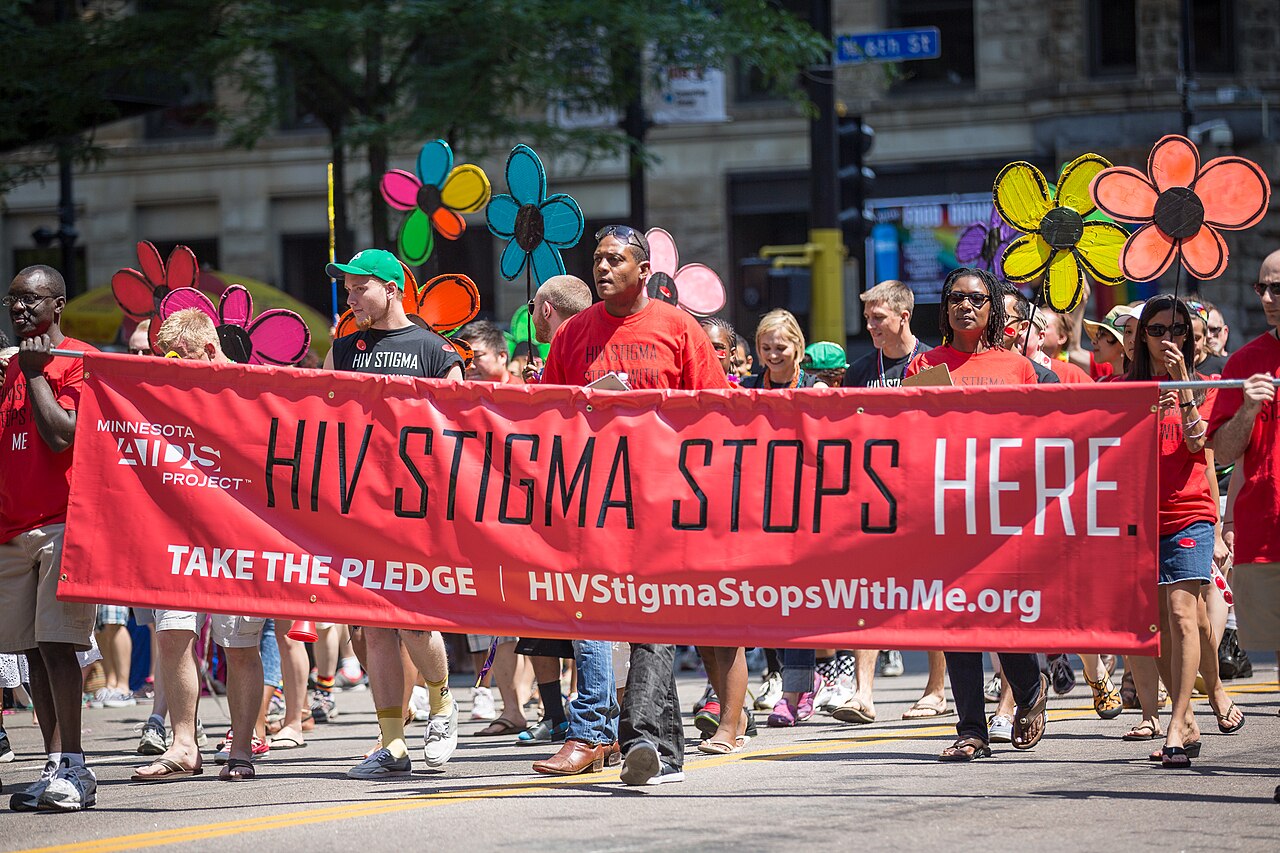
The Wellcome Collection in London is opening a new exhibition that tells the stories of people who fought for dignity and care during the HIV crisis. Called Tenderness and Rage, the show runs from 29 May 2026 to 30 May 2027 and brings together photographs, personal objects, and accounts from activists and those living with HIV across the UK and around the world.
The exhibition begins by looking at London in the early 1990s, when the Aids epidemic was at its peak. A documentary called Dancing Whilst Diagnosed focuses on the Landmark, a drop-in centre in Tulse Hill, south London, where people affected by HIV and Aids could find support. Staff and volunteers who worked there describe how they helped people cope with violence, stigma and discrimination after diagnosis.
But the Landmark was more than a clinic. Former service user Marc Thompson, who later worked in HIV prevention and sexual health, recalled the relief he felt there. "It was the only place that I felt really safe about my HIV," Thompson said. "I didn't have to disclose it to anybody. There was no guessing or hiding, so that really helped me navigate those early years of my own diagnosis." The centre also hosted parties with DJs, drag queens and African music, creating spaces where people could find joy and connection.
Thompson said the exhibition's title captured the emotional reality of that time. "We were so hurt and damaged by everything that we were experiencing that the rage came out through loss or through protest," he explained. "The tenderness resonated with me because of places like the Landmark. That was a place that we could go to get some of that rage soothed and looked after and be nursed and given a balm."
The exhibition also highlights a difficult moment in the Wellcome Trust's own history. In the late 1980s, a pharmaceutical company produced AZT, the first successful HIV drug, but its price was so high that most people with HIV could not afford it. The Wellcome Trust owned a 75% stake in the company. Activists from Act UP, a protest group, decided to fight back. Rob Archer, a co-founder of London and Edinburgh Act Up, bought shares in the drug firm so he could attend the company's annual general meeting in January 1989. There, he challenged the company chair and chief executive about their pricing policy and their treatment of people with Aids. Other activists picketed outside the building with placards reading "We££come AZT Profiteers" and "People Not Profits". The campaign worked. The company slashed the price of AZT.
The exhibition includes powerful photographs by Gideon Mendel from his series The Ward, taken in 1993 at Middlesex hospital. The images show four young gay men—John, Ian, Steven and Andre—on the Broderip and Charles Bell wards, alongside their loved ones and the staff caring for them. The photographs show hugging, touching and emotional support, which was rare at the time. "They tried to make a place which was very emotionally supported," Mendel said. "Staff were encouraged to hug the patients. Touch was really important." The work was brave because of the intense stigma and fear. Rumours circulated that tabloid photographers were stationed outside the ward with long lenses, trying to capture images of patients. Despite this risk, the four men agreed to be photographed, helping to humanise gay men with HIV at a time when media coverage was often cruel.
The exhibition also tells the stories of women living with HIV. A memory store created by Angelina Namiba between 1995 and 2003 includes a published diary of her pregnancy and her daughter's framed handprint. In the early 1990s, pregnant women with HIV were encouraged to create such boxes for their children, as a keepsake in case they died. Hand-stitched fabric body parts—breasts, lips and vulvas—made by women with HIV are also on display. They come from workshops called Our Powerful Bodies and Catwalk4Power, which aimed to improve body image and open discussions about sex, intimacy, sexual health and living with the disease.
The exhibition includes the story of Phindile, who recently lost her job as an Aids counsellor at a clinic in Johannesburg, South Africa, after the Trump administration cut funding to the clinic. Adam Rose, the curator of Tenderness and Rage, said the show reflects how HIV affects different groups in different ways. "The changing demographics of HIV [show] who's most affected [and] which groups are more likely to come to contact or experience greater barriers to accessing treatment," Rose explained. He designed the exhibition to connect the history of HIV protests and care in 1990s London to present-day campaigns around the world, to show why this activism "continues to be so urgent, particularly in the context of ongoing cuts to HIV funding".
Reporting incorporates material from a third-party source. Original