Tomato-soy juice cuts inflammation markers in four weeks, study finds
A specially formulated beverage reduced three key inflammatory proteins in adults with obesity, prompting researchers to test it in pancreatitis patients.
By Millie Hanson
31 May, 2026
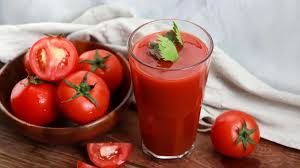
A specially formulated tomato-soy juice reduced several markers of inflammation in adults with obesity after four weeks of daily consumption, according to new research published in Molecular Nutrition & Food Research. The beverage contains high levels of lycopene, a compound that gives tomatoes their red color, and soy isoflavones, plant chemicals that mimic some actions of the hormone estrogen.
The study involved 12 healthy adults with obesity who drank two 6-ounce cans of the tomato-soy juice each day for four weeks. After a break, the same participants consumed a low-carotenoid tomato juice for another four weeks. Researchers measured inflammatory proteins called cytokines in blood samples taken before and after each period.
Only the tomato-soy juice produced significant reductions in three cytokines: Interleukin (IL)-5, IL-12p70, and granulocyte-macrophage colony-stimulating factor (GM-CSF). Researchers also observed a decrease in tumor necrosis factor alpha (TNF-a), though that change did not reach statistical significance. The findings suggest the juice could function as food-based intervention to help control chronic inflammation, which contributes to many long-term health conditions.
"The idea is, can we use food-based interventions to modulate inflammation?" said lead author Jessica Cooperstone, associate professor of horticulture and crop science at The Ohio State University. "And can we test this in a rigorous way so that we can really see this is affecting inflammation, versus just saying something is anti-inflammatory?"
The tomato-soy juice was developed years ago by Ohio State researchers after earlier studies suggested that diets rich in tomato products or soy were associated with lower risk of prostate cancer. The juice was made using tomatoes specially bred to contain elevated levels of lycopene and was fortified with soy isoflavone extract. Subsequent research at Ohio State found that increased consumption of the juice was linked to lower prostate-specific antigen levels in some men with prostate cancer.
Researchers also examined urine samples to look for metabolites, the molecules produced when the body breaks down nutrients. Some metabolite changes appeared after consumption of both the tomato-soy juice and the control tomato juice, indicating that tomatoes may produce biological effects even without high levels of lycopene. However, changes related to soy isoflavone metabolites stood out in participants who consumed the tomato-soy juice, providing additional evidence that the beverage influences human biology in measurable ways.
Building on these results, Cooperstone and colleagues have secured funding from the National Institute of Diabetes and Digestive and Kidney Diseases for a pilot clinical trial investigating whether the same tomato-soy juice can reduce inflammation in people with pancreatitis. Animal studies have suggested that the juice can lessen inflammation and reduce the severity of chronic pancreatitis, a condition that currently has limited treatment options.
"Care for patients with pancreatitis is palliative, focused on controlling pain and GI symptoms," Cooperstone said. "Our hypothesis is that the tomato-soy juice may serve as an intervention to decrease inflammation and hopefully increase patients' quality of life." The research was supported by the U.S. Department of Agriculture, the National Institutes of Health, the Lisa and Dan Wampler Endowed Fellowship for Foods and Health Research, and the Foods for Health Initiative at Ohio State.
Reporting incorporates material from a third-party source. Original