How Karl-Anthony Towns became the player the Knicks needed for their NBA Finals run
Coach Mike Brown's tactical shift and Towns' own improved decision-making have turned a career liability into an offensive and defensive weapon.
By Kayleigh Syke
29 May, 2026
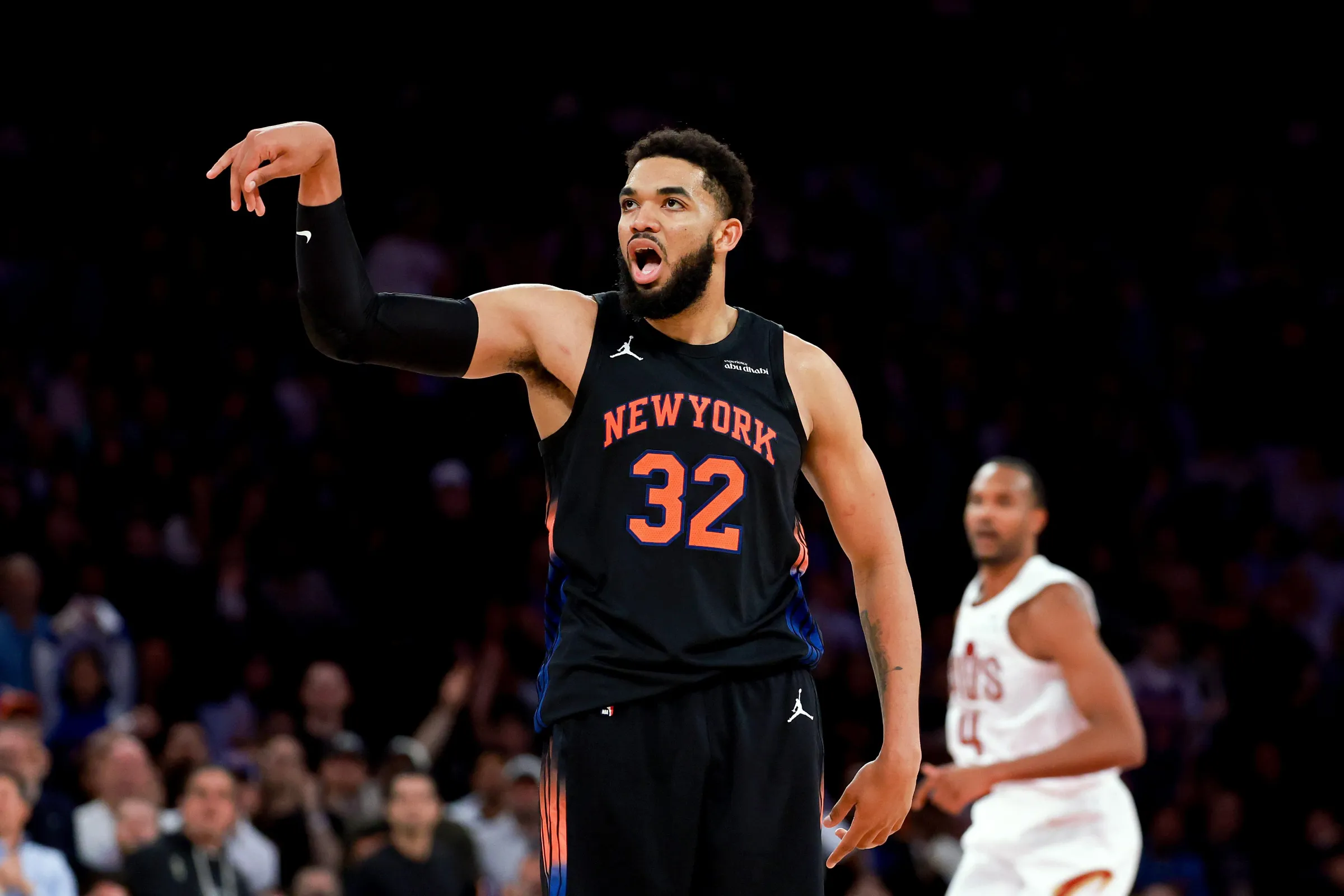
Karl-Anthony Towns entered the NBA as the No. 1 overall pick, and expectations have shadowed him ever since. His resume speaks for itself: six All-Star selections, three All-NBA honors, and three conference final appearances. Yet observers have consistently felt he could do more.
The core problem was a paradox. Towns has always excelled offensively at center, but his defensive limitations capped what his teams could accomplish at that position. Moving him to power forward solved the defense issue but made him vanish on offense. Building a championship team around a player with these constraints seemed impossible.
This postseason, Towns has cracked that riddle. The Knicks are now receiving the fully realized version of him that fans have waited years to see. The change began after a Game 3 loss to the Atlanta Hawks, when head coach Mike Brown made a critical adjustment.
Brown identified a specific weakness in Towns' game. During the regular season, among 161 players with at least five drives per game, Towns had the fourth-lowest pass rate at 18.8 percent, according to NBA.com. When Towns puts the ball on the floor to attack, he often gets tunnel vision and fails to find open teammates. Defenses exploited this by collapsing on him without fear.
Towns has always been capable of making precise passes from a standstill. Brown moved to maximize this strength by running more five-out offense with Towns initiating from the perimeter—a tactic known as "delay." Brown had used similar schemes with Domantas Sabonis when coaching the Sacramento Kings, but it works even better with Towns on the perimeter.
Towns' elite shooting forces his defender (typically a center) to stick with him tightly. This prevents that defender from dropping back to protect the paint. Combined with the difficulty of defending off-ball screens involving OG Anunoby and Jalen Brunson, the Knicks generated an offensive system built for dominance. The team ranks first in offensive rating this postseason.
Yet crediting Brown alone would ignore Towns' own transformation. The Cavaliers limited the Knicks' delay offense effectively early in their series, yet Towns still finished plus-79 in four games. His improvement stems from choices he made on the court.
Towns has historically struggled with quick decisions, often overcomplicating situations and allowing smaller opponents to provoke fouls. This postseason, he has made a dramatic shift. His dribbles per touch have hit their lowest levels ever, a sign of decisiveness. When a defensive opening appears, he no longer hesitates or waits for the floor to reset. He attacks and scores.
This decisiveness makes him an even more effective passing hub. Because he attacks smaller defenders aggressively, opponents must assign a big man to guard him. Cross-matching assignments becomes impossible. Attempting to do so becomes a death sentence for opposing defenses.
The Knicks have allowed Towns to operate as their sole big man on the court, sharing just 27 minutes with Mitchell Robinson this postseason, per PBP Stats. Previously, this alignment hurt their defense. Now it no longer does.
Towns' defensive growth showed clearly in Game 3 against the Cavaliers. Early on, Cleveland attacked his soft hedge coverage to hit the roll man and create a 4-on-3 advantage. The Knicks adjusted, and Towns switched to drop coverage, executing perfectly. He also demonstrated awareness to shift to hard hedge coverage on sideline-angled ball screens, forcing a jump ball on a James Harden possession.
Basketball Reference's Box Plus-Minus metric offers another window into Towns' impact. Through two rounds, he was one of only four players to maintain a BPM over 14 while playing at least ten playoff games. That mark has ticked down slightly since, but he remains at a level few postseason performers in NBA history have achieved.
Towns is not in the same category as the elite all-time playoff performers. Still, he is playing at a borderline All-NBA level. Most importantly for the Knicks, his breakthrough has brought the franchise closer to ending its championship drought than it has been in three decades.
Reporting incorporates material from a third-party source. Original