Muslims in Texas Face Increased Scrutiny and Political Attacks
New housing developments and schools with Islamic ties are becoming targets in Republican campaigns, sparking concerns about religious discrimination.
By Polaris Newsroom
10 May, 2026
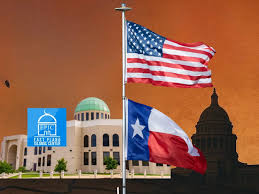
In Texas, political campaigns are increasingly focusing on Muslims and the idea of an "Islamification of Texas." Top Republican officials in the state have also passed laws and enacted policies that target Muslim organizations and development projects.
Stephanie Sy reports on how this rise in anti-Muslim language and policies is affecting Muslim communities across the state.
The East Plano Islamic Center, known as EPIC, is often full during Friday prayers. Yasir Qadhi, the center's Islamic scholar, said the mosque's membership has grown significantly, mirroring the population increase in the Dallas-Fort Worth area.
To accommodate the growing community, members proposed a planned neighborhood called Epic City. Imran Chaudhary, the lead developer, explained that the project aimed to create a Muslim-friendly community with about 1,000 homes on 400 acres, located about 40 minutes northeast of Dallas.
Chaudhary stated that he did not anticipate the project becoming controversial. He said they were simply developing a community and never expected the negative attention it received. The development was intended to be welcoming to all.
A promotional video for the project went viral, leading to backlash online. Critics called it an "Islamic stronghold" and "Sharia City." This online reaction reached Governor Greg Abbott, who signed a law he described as "banning Sharia compounds in Texas."
Governor Abbott claimed the development required buyers to abide by Sharia law. However, Chaudhary stated that the development had no religious requirement for residents and that everyone was welcome. He called the information spread by influencers and politicians false.
Qadhi explained that for most American Muslims, Sharia refers to personal religious practices like being kind to one's mother and being a good person. He noted that the interpretation used by critics does not align with how most Muslims in the country understand Sharia, which they see as a personal set of ethics and the law of God.
Governor Abbott also ordered state agencies to investigate the mosque and the development. Attorney General Ken Paxton filed lawsuits to stop the project. The Department of Justice began an investigation but closed it without finding any wrongdoing.
Chaudhary emphasized that the development would follow all local, city, and state laws, just like any other project. He feels the project is being targeted simply because it is a Muslim-led development.
Veteran Republican strategist Vinny Minchillo suggested that the project faced challenges due to public perception. He noted that the name "Epic City" and the architectural designs made it appear to be a religious compound rather than a mixed-use development.
The development has since been renamed The Meadow, and the promotional video was removed. However, Minchillo believes it might be too late to change public opinion. He stated that some people perceive the community as isolationist and wanting to live under Sharia law, fearing their ultimate goals.
The online outrage has fueled local opposition and anti-Islamic incidents. Yasir Qadhi described an incident where a man placed a pig's head with a Quran inside outside the mosque. This act was carried out by Jake Lang, an influencer and participant in the January 6 events.
Islamic-oriented schools are also facing scrutiny within the state's school voucher program. Brighter Horizons Academy, a K-12 private school in Garland, has 1,200 students. Ehsan Sayed, who attended the school and now serves on a nonprofit board overseeing it, explained its curriculum.
Sayed said the school offers the same secular subjects as other private schools, along with supplementary religious classes. When Texas launched its school choice program, offering public funds for students in approved private schools, Sayed saw it as a chance for the school to gain resources and accept more students.
Brighter Horizons met accreditation requirements but was excluded from the list of approved schools for the voucher program without explanation. Several other Islamic private schools in Texas faced the same exclusion.
This exclusion caused confusion for parents, both current and prospective. After suing the state for discrimination, Brighter Horizons and other schools were added to the eligibility list, though they continue to pursue their lawsuit. Sayed believes the exclusion was part of a larger political trend against Muslims.
Political rhetoric from figures like Senator John Cornyn and Senator Ted Cruz has also targeted Islam. Cornyn called radical Islam a "bloodthirsty ideology" and stated that Sharia law has no place in American courts. Cruz echoed this sentiment, saying Sharia law should never be allowed in the United States.
GOP strategist Vinny Minchillo believes the Muslim community has become a political target. He suggested that with immigration concerns at the border potentially being addressed, politicians are shifting focus to other perceived issues, like the Muslim community.
Minchillo stated that conversations about Muslims in Texas currently lack nuance and are highly politicized. He described it as an "on/off switch issue" that politicians are reacting to based on public opinion and polling data.
This rhetoric contrasts with the experiences of many of Texas's Muslim residents. Ahmed Osman, an 11th grader at Brighter Horizons, expressed that students simply want to be accepted without facing judgment. He identifies as Muslim, American, and Texan.
Reporting incorporates material from a third-party source. Original