Brazil prepares to challenge China's grip on rare earth mining
A surge in mining projects and foreign investment could make Brazil a major producer of materials critical for electric vehicles and renewable energy.
By Luca Pope
31 May, 2026
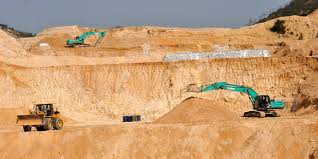
Brazil is entering a new resource boom, this time focused on rare earths—materials essential for electric vehicles, wind turbines, and artificial intelligence systems. The country holds the world's second-largest reserves of these elements, behind only China, and is seeing rapid growth in mining interest from foreign companies.
Rare earths are crucial for making high-performance magnets used in modern technology. According to the International Energy Agency (IEA), "demand for magnet rare earth elements (neodymium, praseodymium, dysprosium and terbium) has doubled since 2015 and is set to expand further by a third by 2030 under today's policy settings, thanks to growing electrification and the rapid deployment of new energy technologies such as EVs and wind turbines." Growing use of automation, robotics, and digital technologies will push demand even higher.
Brazil holds roughly 21 million tons of rare earth reserves, while China controls about 44 million tons. Meteoric Resources, an Australian mining company, is betting that Brazil will eventually compete with China. Its Caldeira project in Minas Gerais is believed to be the world's largest ionic clay deposit, a type of geological formation rich in medium and heavy rare earths like dysprosium and terbium.
Mining applications in Brazil have exploded. The country's National Mining Agency received just over 250 rare earth mining applications between 1975 and 2020. From 2023 to 2024 alone, it received 1,662 applications. There are now 2,758 projects under consideration. This surge has boosted stock prices for companies investing in Brazilian rare earths, with shares in Meteoric, Resouro Strategic Metals, Appia Rare Earths and Uranium Corp, and USA Rare Earths rising between 65% and 122% over the past year.
In April, USA Rare Earths bought Brazil's only active rare earth mine from Serra Verde for $2.8 billion (€2.4 billion). The Pela Ema mine in Goias state is Brazil's sole producer of rare earth elements at scale. CEO Barbara Humpton said the mine is "a one-of-a-kind asset and the only producer outside Asia capable of supplying all four magnetic rare earths at scale." The deal also includes a 15-year supply agreement with several US government agencies.
Brazil's main weakness is that it has largely exported raw materials without processing or refining them domestically. China dominates this stage of production, handling more than 90 percent of global rare earth refining and controlling around 95 percent of the permanent magnet market. When China restricted rare earth exports during its trade dispute with the United States, it exposed how dependent the world is on Chinese supply chains.
Building a complete rare earth value chain will take time, according to Meteoric CEO Andrew Tunks. "Brazil could become competitive relatively quickly in mining," Tunks said. "But when it comes to manufacturing, it will still take some time." Brazil, along with India, Vietnam, Sweden, and Norway, is working to develop its own processing and manufacturing capacity.
Brazil has geological advantages that make rare earth extraction easier than in other countries. Around 73 percent of Brazil's deposits are ionic clay formations, which have naturally weathered from granite rock. Francisco Valdir Silveira, head of the Brazilian Geological Society, explained that "the original granite rock has already been altered or weathered over time. That makes ionic clay deposits easier to mine."
Environmental conditions also favor Brazilian operations. Tunks noted that rare earth separation requires large amounts of electricity and water. "Our mine in Brazil runs entirely on renewable energy, and electricity is cheap," he said. "You simply don't have that in Australia. It's very dry there and electricity is very expensive." German companies remain only selectively involved in Brazilian rare earth mining, though Germany is seeking to expand partnerships with Brazil in critical minerals and supply chain security.
Reporting incorporates material from a third-party source. Original